303_Bies Posted May 26, 2018 Posted May 26, 2018 Hi, There were 3 different variants of Spitfire IX used: LF with Merlin 66 optimised for low alt (often with clipped wingtips)(most common variant) F with Merlin 63 optimised for medium alt (most common with normal wingtips) HF with Merlin 70 optimised for high alt (often with even more elongated wingtips) (probably least common variant) In the game we have Spitfire LF Mk.IXe with Merlin 66 and clipped wingtips as modification and HF with Merlin 70 as modification. 1) Was F variant with Merlin 63 and normal wingtips even less common than HF with Merlin 70? 2) Should we have elongated wingtips for HF variant with Merlin 70 or they were even less common than Merlin 70? 3) Was F variant with Merlin 63 replaced by LF and HF variants we have? cheers and have a fantastic day? 1
Eicio Posted May 26, 2018 Posted May 26, 2018 Thx for the picture, I was sure I read something about a Spitfire with longer wings but I couldn't find any picture of it.
AndyJWest Posted May 26, 2018 Posted May 26, 2018 I don't have numbers, but I think that pointy-winged Spitfires were relatively rare, and I'm not sure that Mk. IX's with 'e' wings would ever have had them. In the BoBp context, they would probably only be relevant for intercepting rare high-level reconnaissance flights anyway.
303_Bies Posted May 26, 2018 Author Posted May 26, 2018 (edited) But what about variant F for medium alt? Was standard medium alt F variant with Merlin 63 replaced by LF and HF variants we have? cheers Edited May 26, 2018 by bies
ATAG_Flare Posted May 26, 2018 Posted May 26, 2018 (edited) 2 minutes ago, bies said: But what about variant F for medium alt? Was F variant with Merlin 63 replaced by LF and HF variants we have? cheers I was under the impression that even though the 66 was better at low alt, it was still as good as the regular Merlin at all altitudes (although I think that was compared to the 61 not the 63) so the LF version was basically a straight upgrade compared to the F. Edited May 26, 2018 by ATAG_Flare
AndyJWest Posted May 26, 2018 Posted May 26, 2018 (edited) From Wikipedia (not the best source, admittedly): Quote During the second half of 1943, production of the Merlin 63 powered F Mk IX was discontinued in favour of the Merlin 66 powered LF Mk IX. https://en.wikipedia.org/wiki/Supermarine_Spitfire_(late_Merlin-powered_variants)#Mk_IX_(type_361) Edited May 26, 2018 by AndyJWest corrected link to right part of article
PainGod85 Posted May 26, 2018 Posted May 26, 2018 32 minutes ago, ATAG_Flare said: I was under the impression that even though the 66 was better at low alt, it was still as good as the regular Merlin at all altitudes (although I think that was compared to the 61 not the 63) so the LF version was basically a straight upgrade compared to the F. Nope. The Merlin 66 sacrificed performance at high altitude to have better down low. Essentially, they're the same engines with different supercharger gearing. This means the low altitude version has a weaker supercharger and thus lower critical altitude.
=362nd_FS=RoflSeal Posted May 26, 2018 Posted May 26, 2018 As far as I am aware, Mk IX with the E wing (which is what we have), beginning production in early 1944, Most had Merlin 66 and about 400 had Merlin 70. Merlin 63 was out of production by that time, and thus F Mk IX were only with C wing Spitfires
CisTer-dB- Posted May 26, 2018 Posted May 26, 2018 1 hour ago, ATAG_Flare said: I was under the impression that even though the 66 was better at low alt, it was still as good as the regular Merlin at all altitudes (although I think that was compared to the 61 not the 63) so the LF version was basically a straight upgrade compared to the F. You are right Flare except the very high level 25K and above where the Merlin 70 shine Low gear high gear Merlin 66, 67 & 85 1,400 b.h.p. 9,250 ft 1,310 b.h.p. 19,000 ft Merlin 70, 71, 76 & 77 1,375 b.h.p. 13,500 ft 1,255 b.h.p. 25,250 ft
303_Bies Posted May 26, 2018 Author Posted May 26, 2018 (edited) 1 hour ago, AndyJWest said: https://en.wikipedia.org/wiki/Supermarine_Spitfire_(late_Merlin-powered_variants)#T_Mk_IX_and_TR_9_(type_509) 1 hour ago, ATAG_dB said: 6_Spitfire_IX-XI-XVI.pdf Thanks for your answers.? Edited May 26, 2018 by bies
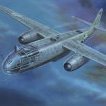
blockheadgreen_ Posted May 26, 2018 Posted May 26, 2018 The extended wingtips were never fitted to the HF. IX, only the Mk. VI, VII and a few VIIIs. In fact, that photo shows a Mk. VIII, not a IX (retracted tail wheel). 1
ATAG_Flare Posted May 26, 2018 Posted May 26, 2018 4 hours ago, ATAG_dB said: You are right Flare except the very high level 25K and above where the Merlin 70 shine Low gear high gear Merlin 66, 67 & 85 1,400 b.h.p. 9,250 ft 1,310 b.h.p. 19,000 ft Merlin 70, 71, 76 & 77 1,375 b.h.p. 13,500 ft 1,255 b.h.p. 25,250 ft What's the high gear horsepower for the Merlin 61 and 63 though? I know the 70 will be better at high alts, but is the 61 better at high alts than the 66?
Talon_ Posted May 27, 2018 Posted May 27, 2018 39 minutes ago, ATAG_Flare said: What's the high gear horsepower for the Merlin 61 and 63 though? I know the 70 will be better at high alts, but is the 61 better at high alts than the 66? The Merlin 61 was simply a much earlier version of the 6-series Merlin engine than the 63/66/70. It was roughly equivalent in full throttle heights to a Merlin 63 but with about 200hp less at any point.
HBPencil Posted May 27, 2018 Posted May 27, 2018 In regards to BoBP, the extended wing tips wouldn't have been around, having been removed from service some time beforehand. For example, those squadrons operating the HF.VII over NW Europe with extended wing tips and the high-alt paint scheme had reverted to to standard wing tips and the Day Fighter Scheme cammo within two weeks of the D-Day landings because there was no action for them at high altitudes, it was all taking place at more reasonable heights. From what Quill wrote the extended wing tips only helped with climb and turn at very high altitudes, in all other respects (especially roll rate) they sucked. An anecdote in regards to extended wing tips; when 81sqn received brand new F and LF MkVIIIs and flew them out to India from Egypt they were fitted with extended wing tips which were still fitted when they went into combat. While boom'n'zooming Japanese aircraft the Spits had some issues with the wings getting over stressed and popping rivets when pulling out of their dives, so standard tips were soon installed. In regards to the LF.IX that prefix is something of misnomer, the Merlin 66 wasn't a true low-alt engine like you would find in the LF.V but rather the supercharger gears were set to give best performance at altitudes where the Brits believed the 190 was at its best. Bear in mind that most P-51Ds, the archetypal escort fighter, were fitted with the Packard built version of the 66 so performance at altitude wasn't a problem.
ShamrockOneFive Posted May 27, 2018 Posted May 27, 2018 11 hours ago, bies said: Hi, There were 3 different variants of Spitfire IX used: LF with Merlin 66 optimised for low alt (often with clipped wingtips)(most common variant) F with Merlin 63 optimised for medium alt (most common with normal wingtips) HF with Merlin 70 optimised for high alt (often with even more elongated wingtips) (probably least common variant) In the game we have Spitfire LF Mk.IXe with Merlin 66 and clipped wingtips as modification and HF with Merlin 70 as modification. 1) Was F variant with Merlin 63 and normal wingtips even less common than HF with Merlin 70? 2) Should we have elongated wingtips for HF variant with Merlin 70 or they were even less common than Merlin 70? 3) Was F variant with Merlin 63 replaced by LF and HF variants we have? cheers and have a fantastic day? There are more variations than that actually. The first Mark IX models were Mark V airframes with Merlin 61 engines installed. Then a little later we have the Merlin 61a and then the Merlin 63. These are all F.IX. I'm simplifying because the engine changes came with other refinements and changes too. The LF.IX was, as you point out, the Merlin 66 version of the IX and it is by far the most common. Clipped wingtips were common but some think that the LF designation is with regards to the wingtips and that part is wrong. It's purely about the engine. The Merlin 66 was geared so as to make the Spitfire IX faster than the FW190A at all altitudes. So to answer: 1) The LF was by far the most produced and the F (Merlin 61-63) were earlier versions and mostly a 1942 aircraft. 2) I've never seen a Spitfire IX with the elongated wingtips. I suspect the one pictured above is actually a HF.VIII. Most were fitted with the standard wingtips. 3) Yes, that'd be correct.
303_Bies Posted May 27, 2018 Author Posted May 27, 2018 6 hours ago, HBPencil said: From what Quill wrote the extended wing tips only helped with climb and turn at very high altitudes If i remember corrcetly extended wing tips increased also the speed at high alt because the plane needed smaller angle of attack to fly straight in very thin air. Additional drag generated by longer wings was far smaller than additional drag generated by bigger AoA of standard-wing Spitfire. (Similar in case of Ta-152H). But as people said Spitfire HF Mk. IXe didn't use them. Thanks for all info.? 1
EAF19_Marsh Posted May 27, 2018 Posted May 27, 2018 Quote In fact, that photo shows a Mk. VIII, not a IX (retracted tail wheel). Also prettier (though not with the pointy tips)
GridiroN Posted May 27, 2018 Posted May 27, 2018 21 hours ago, ATAG_dB said: You are right Flare except the very high level 25K and above where the Merlin 70 shine Low gear high gear Merlin 66, 67 & 85 1,400 b.h.p. 9,250 ft 1,310 b.h.p. 19,000 ft Merlin 70, 71, 76 & 77 1,375 b.h.p. 13,500 ft 1,255 b.h.p. 25,250 ft Can someone with engineering knowledge of engines explain how an engine that produces more horsepower at all altitudes is weaker at a given altitude than an engine that produces less? (ie. 66 vs 70)
Ehret Posted May 27, 2018 Posted May 27, 2018 (edited) 32 minutes ago, GridiroN said: Can someone with engineering knowledge of engines explain how an engine that produces more horsepower at all altitudes is weaker at a given altitude than an engine that produces less? (ie. 66 vs 70) Not sure what you mean... There are two things - with multi-speeds superchargers you can have substantial dips in power between gears. The second is that the supercharger may be set for higher critical altitude. When you aren't flying high the air will be over-compressed, the surplus goes through a waste-gate, but what remain will be hotter than otherwise. This decrease power. Edited May 27, 2018 by Ehret
Barnacles Posted May 27, 2018 Posted May 27, 2018 At a given altitude whatever engine has the higher stated power is the stronger. If the engine information is not complete, for example the information doesn't state power for 30000 ft. Either engine MAY be more powerful than the other, but you can't necessarily tell without extra data.
GridiroN Posted May 27, 2018 Posted May 27, 2018 (edited) 18 minutes ago, 71st_AH_Barnacles said: At a given altitude whatever engine has the higher stated power is the stronger. If the engine information is not complete, for example the information doesn't state power for 30000 ft. Either engine MAY be more powerful than the other, but you can't necessarily tell without extra data. The Merlin 66 and 45 has higher stated horsepower at every relevant altitude vs the 46 and the 70. What is the purpose of adding the 46 or the 70 in the sim if it's worse in 99% of all scenarios. Adding an engine that isn't of use until after 8000-9000m doesn't seem like something these devs would do. The manual lists higher top speeds at altitudes where the HP is lower as far as I recall. Edited May 27, 2018 by GridiroN
MicEzo Posted May 27, 2018 Posted May 27, 2018 4 minutes ago, GridiroN said: The Merlin 66 and 45 has higher stated horsepower at every relevant altitude vs the 46 and the 70. What is the purpose of adding the 46 or the 70 in the sim if it's worse in 99% of all scenarios. But you know lend lease Spitfires Mk.Vb which fought in Kuban had Merlins 46? And 45 is added as non exactly historical option when we speak about the eastern front.
ShamrockOneFive Posted May 27, 2018 Posted May 27, 2018 Different situations with each. With the Spitfire Mark Vb the Merlin 46 is the default engine (for VVS examples) and the one fitted to most of the Spitfire Vbs. For historical scenarios the 46 would be the one to be used most of the time. The Merlin 45 probably was added because we asked for it and because a smaller number of Russian Spitfires did have this engine installed. For the Spitfire IX I think it was probably because somebody would ask for it. If you really want to do high alt operations... well the Merlin 70 is your bird. Perhaps high flying recon plane interception missions are in our future? 1
GridiroN Posted May 27, 2018 Posted May 27, 2018 Just now, MicEzo said: But you know lend lease Spitfires Mk.Vb which fought in Kuban had Merlins 46? And 45 is added as non exactly historical option when we speak about the eastern front. I don't really care. It doesn't matter to me which plane had historically which engine. I'm asking how the engine works.
ShamrockOneFive Posted May 27, 2018 Posted May 27, 2018 1 minute ago, MicEzo said: But you know lend lease Spitfires Mk.Vb which fought in Kuban had Merlins 46? And 45 is added as non exactly historical option when we speak about the eastern front. So far as I know, some Russian Spitfires DID have the Merlin 45. It may have been fewer than 10 however. 1
JtD Posted May 27, 2018 Posted May 27, 2018 (edited) Merlin 70 is more powerful than the 66 at altitudes between about 3000 and 5000 meters and at altitudes above 7000. The reason for this is a different supercharger gear. If you're ever going to fly the Spitfire above immediate sea level, the Merlin 70 is not behind in terms of performance. Comparison trials: http://www.spitfireperformance.com/bs543speed.jpg http://www.spitfireperformance.com/bs543climb.jpg Merlin 70 climbs faster to anywhere above 3km. It's not just a purely high altitude engine. Merlin 46 gets more powerful than the Merlin 45 at about 4km and above. Again different superchargers. While this might be meaningless in game, it counted in a war where most engagements were fought above 4km and the guy who started the fight in the better position (higher and faster) was usually the guy to survive the fight. Edited May 27, 2018 by JtD 45 1 2
ZachariasX Posted May 27, 2018 Posted May 27, 2018 7 minutes ago, GridiroN said: I don't really care. It doesn't matter to me which plane had historically which engine. I'm asking how the engine works. What you are seeing is that the higher gearing of the 70 bleeds more shaft hp. Hence, if you only look at the stated shaft hp of the critical altitude, the lower gearing will always "be more powerful". But this is only half the story. The important thing that you are missing is the following: Above critical altitude of the 66, the 70 has progressively more shaft hp than the 66 because it is still running in first gear. Until the 70 switches to the second gear, it will be stronger. In second gear again, the 66 has a lower gearing than the 70, making it again more powerful than the 70 until you pass critical altitude of the 66. Then the supercharger cannot keep up to provide full manifold pressure and you progressively start to lose shaft hp. Then qickly the 70 is more powerful again, as it is able to produce full boost up to 25k. 1 1
Sgt_Joch Posted May 28, 2018 Posted May 28, 2018 (edited) I had hoped the devs would have both the merlin 66 and 70. As to why they have them, the answer is historical availability since both the 66 and 70 were widely available to RAF squadrons in the BOBP time frame. As I recall, but I may be remembering wrong, the HF/70 was more a pure air superiority fighter version while the LF/66 was more of a fighter-bomber version. Edited May 28, 2018 by Sgt_Joch
ZachariasX Posted May 29, 2018 Posted May 29, 2018 12 hours ago, Sgt_Joch said: I had hoped the devs would have both the merlin 66 and 70. As to why they have them, the answer is historical availability since both the 66 and 70 were widely available to RAF squadrons in the BOBP time frame. As I recall, but I may be remembering wrong, the HF/70 was more a pure air superiority fighter version while the LF/66 was more of a fighter-bomber version. The HF were intended to intercept the high altitude bombers the Germans never made besides old stuff like the Ju-86P. They were indeed used to intercept 109 recce variants operating at high altitude. But these were few. The Merlin 66 gave the Spit already the edge over the common competition at high altitudes, thus there was little need for the 70.
Flynco Posted May 29, 2018 Posted May 29, 2018 Production of the LF Mk IXs, frequently referred to as the Spitfire IXB, initially ran in parallel with the Merlin 63 powered Marks. This version first became operational in March 1943 with the Biggin Hill Wing, comprised at the time of 611 and 341 (Free French) Squadrons. This type was by far the most produced of the Spitfire IX variants, with over 4,000 built. The maximum power of the Merlin 66 was 1,720 hp (1,280 kW) at 5,750 ft (1,283 kW at 1,752 m) and the maximum speed of the Spitfire LF IX was 404 mph (650 km/h) at 21,000 feet (6,400 m).[35] The Merlin 66 introduced a new Bendix-Stromberg injection carburettor, which replaced the earlier S.U float carburettor.[32] The H.F IX was powered by the specialised high altitude Merlin 70 and entered service in the Spring of 1944. Serial listings show that the HF Mk IX was produced in relatively limited numbers when they were required, with priority being given to versions rated for low and medium altitudes[nb 6] Maximum power of the Merlin 70 was 1,710 hp (1,280 kW) at 11,000 ft (1,275 kW at 3,353 m): maximum speed of the Spitfire HF.IX was 405 mph (652 km/h) at 25,400 feet (7,700 m) at an all-up weight of 7,320 lb (3,320 kg).[37] The cockpit of a Spitfire IX showing the instrument panel and the Mk II Gyro gunsight. Also introduced in early 1944 was a new Mark II Gyro gunsight. This gunsight calculated the correct angle of deflection to use when leading the target. Its introduction doubled the effectiveness of RAF gunnery and was a major factor in Allied air superiority.[38] The capacity of the main fuel tanks was 48 gal for the upper tank and 37 gal for the lower, for a total internal capacity of 85 gal. Jettisonable "slipper tanks" of 30, 45 or 90 gal could be carried under the centre-section.[39] As an alternative a cylindrical 50 gal drop tank, adapted from those carried by long range Hawker Typhoons, could be carried on the fuselage bomb rack used on most Mk IXs of the Second Tactical Air Force. To further increase the combat radius some late production Mk IXs were fitted with additional internal self-sealing fuel tanks in the rear fuselage: the upper tank carried 41 gal and the lower 34 gal. When both were full this enabled a ferry range of over 1,200 miles (1,900 km), although they made the aircraft unstable in flight and only straight flight and gentle manoeuvres at low altitudes were recommended by the pilot's manual. The pilot was also warned to avoid instrument flying whenever possible.[40][41]
blockheadgreen_ Posted May 30, 2018 Posted May 30, 2018 (edited) I’m not sure what the top speed of the G-14 is above 20,000 feet, but with the HF engine the IX should have a top speed of about 422 mph (677? km/h) at 25k, which is faster than the G-14/AS which tops out at ~414 mph at a similar altitude - Is there a good source for the standard G-14? Edited May 30, 2018 by Lythronax
=362nd_FS=RoflSeal Posted May 30, 2018 Posted May 30, 2018 (edited) That G-14 that is in the mike Williams graph has the wing cannons installed http://kurfurst.org/Performance_tests/109G14_PBLeistungen/Leistungen_g14u4_am-asm.html This is G-14 powered by AM engine and slick but running MW30 (same boost and power though) Edited May 30, 2018 by RoflSeal
Poochnboo Posted May 30, 2018 Posted May 30, 2018 No thanks on those pointy wingtips. The Spit we have is absoltely gorgeous. An outstanding model. Don't mess with it.
blockheadgreen_ Posted May 30, 2018 Posted May 30, 2018 1 hour ago, RoflSeal said: That G-14 that is in the mike Williams graph has the wing cannons installed http://kurfurst.org/Performance_tests/109G14_PBLeistungen/Leistungen_g14u4_am-asm.html This is G-14 powered by AM engine and slick but running MW30 (same boost and power though) Surprised, it's still slower than the Merlin 66 Spit, but I assume since the G-14 has a higher P/W ratio its initial acceleration is better.
=362nd_FS=RoflSeal Posted May 30, 2018 Posted May 30, 2018 (edited) 6 minutes ago, Lythronax said: Surprised, it's still slower than the Merlin 66 Spit, but I assume since the G-14 has a higher P/W ratio its initial acceleration is better. No, Spit LF Mk IX does 335mph on the deck, G-14 does 355mph (568kph), ingame it slightly overperforms (but within devs +-2% target) at 360mph (576kph) Edited May 30, 2018 by RoflSeal
blockheadgreen_ Posted May 30, 2018 Posted May 30, 2018 1 hour ago, RoflSeal said: No, Spit LF Mk IX does 335mph on the deck, G-14 does 355mph (568kph), ingame it slightly overperforms (but within devs +-2% target) at 360mph (576kph) Is that graph based on sea level figures?


Recommended Posts
Please sign in to comment
You will be able to leave a comment after signing in
Sign In Now